
Your basil looked fine in the morning, and by late afternoon the terracotta pot feels bone dry. The same plant in a black nursery pot, sitting a foot away on the same sunny balcony, still has moisture in the mix. That difference is real, and it is not just your watering habits.
Terracotta dries faster because the pot itself breathes. Unglazed clay pulls water from the potting mix and releases it through its walls, while thin plastic nursery pots hold that moisture in. Add direct sun, balcony wind, and reflected heat from concrete or metal railings, and terracotta can lose water surprisingly fast - sometimes enough to turn a once-daily watering routine into a twice-daily one in midsummer.
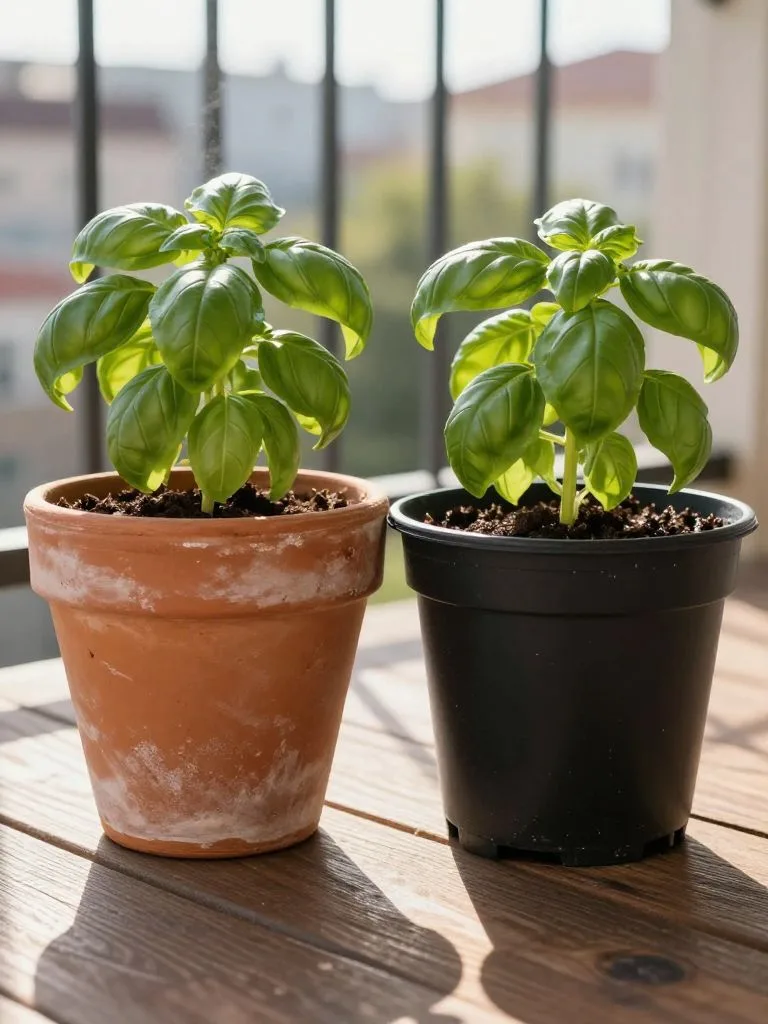
If you garden on an exposed balcony in a place like Phoenix, Barcelona, or a south-facing apartment in Chicago, terracotta is usually the thirstier choice. It looks better. It also demands more attention.
Porous clay walls actively pull moisture out of the potting mix
Unglazed terracotta is porous. Water moves from damp soil into the clay, then evaporates from the pot's outer surface. Plastic nursery pots do not do this. Their walls are mostly impermeable, so the mix only loses water from the top surface and through drainage holes.
This means the container itself becomes part of the drying process. If you touch a terracotta pot after watering, it often darkens as it absorbs moisture. A few hours later, that damp look fades as water leaves the clay. On a bright balcony, especially with afternoon sun, the pot is basically acting like an extra evaporating surface.
The effect is strongest with smaller pots. A 6-inch terracotta pot has a high surface-area-to-soil-volume ratio, so a lot of the root zone is close to those drying walls. In a plastic nursery pot of the same size, roots are insulated from that side loss.
Sun heats terracotta differently than nursery plastic
Sunny balconies create harsh microclimates. Walls bounce heat. Railings trap it. Wind strips away moisture. The pot material changes how the root zone experiences all of that.
Terracotta can stay cooler than black plastic in some direct-sun situations because light-colored clay reflects more sunlight than a thin black pot. That part surprises people. But cooler surface temperature does not mean slower drying. The clay still wicks and releases water. So even if the pot wall is not scorching, it can continue drying the mix steadily all day.
Black nursery pots often heat up more, sometimes enough to stress roots near the outside edge. Yet they usually hold moisture longer because they do not breathe. So the trade-off is awkward but clear: terracotta may offer a gentler root-zone temperature in some setups, while plastic usually wins on water retention.
On a west-facing balcony with 6 to 8 hours of summer sun, that water-retention advantage matters more than looks for thirsty annuals, vegetables, and soft-leaved herbs.
Wind on balconies speeds evaporation far more than gardeners expect
Balconies are rarely calm. Even when the street feels still, upper floors often get constant air movement. That airflow strips moisture from the top inch of potting mix, and with terracotta it also pulls moisture from the pot walls.
This double loss is why terracotta can go from evenly moist to dry around the edges so quickly. The top dries. The sides dry. Fine roots near the wall feel it first. Plants like mint, parsley, impatiens, and hydrangea suffer sooner than rosemary or lavender.
Plastic has fewer routes for water to escape. It is not immune to balcony wind, but it gives you a buffer. That buffer can be the difference between a healthy container and wilt by 3 p.m.
Potting mix behaves differently in terracotta than in nursery containers
The same bagged mix does not perform the same way in every pot. A peat-based mix such as Miracle-Gro Potting Mix or a coir-heavy blend can dry unevenly in terracotta because the container walls pull moisture outward. The center may stay slightly damp while the edges become dusty and hard.
Once that happens, water can channel straight through the pot on the next watering. You pour, it drains, and the root ball still is not evenly rehydrated. This is common with compacted root balls fresh from nursery containers, especially with plants sold in dense greenhouse media.
Nursery pots are less likely to create that dry edge band. They still dry from the top, of course, but they do not constantly siphon moisture through the sides. For balcony gardeners who miss a day now and then, plastic is simply more forgiving.
Why newly transplanted plants struggle more in terracotta
A plant moved from a nursery pot into terracotta often needs a short adjustment period. Its original root ball was formed in plastic, where moisture stayed more stable. Once transplanted into porous clay, the outer zone can dry much faster than the center of the old root mass.
This creates a mismatch. The plant's roots may still be concentrated in the original plug, while the new surrounding mix dries quickly against the terracotta walls. Unless you water thoroughly and consistently for the first 7 to 14 days, roots may not spread well into the new soil.
That is one reason balcony gardeners sometimes think the plant "hates" terracotta. The issue is usually not hatred. It is a steeper moisture gradient after transplanting.
Plants that usually tolerate terracotta better than others
Terracotta is not a mistake. It just suits certain plants better. Mediterranean species often appreciate the faster drying cycle, especially in mixes with added pumice or perlite.
- Rosemary
- Thyme
- Lavender
- Portulaca
- Sedum
- Aloe and many cacti
Plants that prefer evenly moist conditions are harder to keep happy in terracotta on a sunny balcony. Basil can work, but it will ask for regular watering. Ferns, caladiums, and impatiens are poor candidates unless the balcony gets only gentle morning light.
The non-obvious part is this: even drought-tolerant plants in terracotta may need frequent watering while they are small. A tiny lavender in a hot 5-inch clay pot can dry faster than an established basil in a larger plastic pot.
Simple ways to slow drying without giving up terracotta
If you like the look of terracotta, you do not need to abandon it. You just need to reduce how hard the pot works against you.
- Choose larger pots. Moving from 6 inches to 10 or 12 inches makes a big difference.
- Soak new terracotta before planting so the dry clay does not immediately pull water from fresh mix.
- Use a potting mix with moisture retention, but keep drainage strong with perlite, pumice, or fine bark.
- Mulch the surface with bark chips, gravel, or coco chips to reduce top evaporation.
- Group pots together to create a slightly more humid pocket.
- Use saucers carefully if the plant likes more moisture, but do not leave roots standing in water for long.
- Shift thirsty plants away from the brightest reflected heat near walls or metal railings.
A cachepot setup can help too. Keeping a nursery pot inside a decorative outer terracotta container gives you the look of clay with slower drying. For balconies, that is often the smarter arrangement.
When plastic nursery pots are the better choice
For edible plants, seedlings, and anything that wilts fast, nursery pots are often the better tool. They are cheap, light, and easier to manage if you travel for a weekend or work long hours. On a windy seventh-floor balcony, convenience matters more than style.
I would choose plastic first for basil, parsley, lettuce, young tomato starts, and summer annuals that need consistent moisture. A 1-gallon nursery pot may not look charming, but it gives you more room for error. In July, that extra margin is useful.
Terracotta still earns its place for rosemary, sage, succulents, and plants that resent soggy roots. For everything else in intense sun, plastic is usually the more practical container.
How can you tell if your balcony setup is drying pots unusually fast?
Do a simple comparison test. Fill one terracotta pot and one nursery pot with the same potting mix, same plant size, and same exposure. Water both thoroughly until excess drains out, then check moisture 24 hours later with your finger or a moisture meter.
If the terracotta pot is dry 1 to 2 inches down while the nursery pot is still moist below the surface, your balcony conditions are amplifying the clay's normal behavior. Repeat the test during a warm spell above 85 F, and the difference usually becomes even more obvious.
You can also weigh pots after watering and again the next day with a small luggage scale. The lighter one is losing water faster, and on a sunny balcony it is often the terracotta container by a clear margin.
Can sealing terracotta stop it from drying out so quickly?
Sealing the inside of terracotta can reduce moisture loss through the walls, but it changes how the pot behaves. Once sealed, it stops offering the same breathability people often buy it for in the first place.
If you do try a sealant, use one labeled safe for planters and let it cure fully. Even then, results vary. The pot may retain more moisture, but salts can still build up, and the finish may wear over time.
For most balcony gardeners, using a nursery pot as an insert is easier, cheaper, and less messy than sealing every clay container.
On a sunny balcony, terracotta dries faster for a simple reason: the pot itself is part of the evaporation system. If you want fewer watering emergencies, keep moisture-loving plants in nursery pots and save terracotta for species that prefer a sharper wet-dry cycle.