
You can water a dracaena, a pothos, and a heartleaf philodendron from the same kitchen faucet and get three different results. The dracaena often tells on your tap water first. Its leaf tips turn tan, then brown, while the other two plants keep looking fine.
That difference is not just bad luck. Dracaena species such as Dracaena marginata and Dracaena fragrans are notably more sensitive to fluoride and dissolved salts than Epipremnum aureum or Philodendron hederaceum. If your dracaena looks singed but the pothos beside it stays glossy, the water itself is a strong suspect.
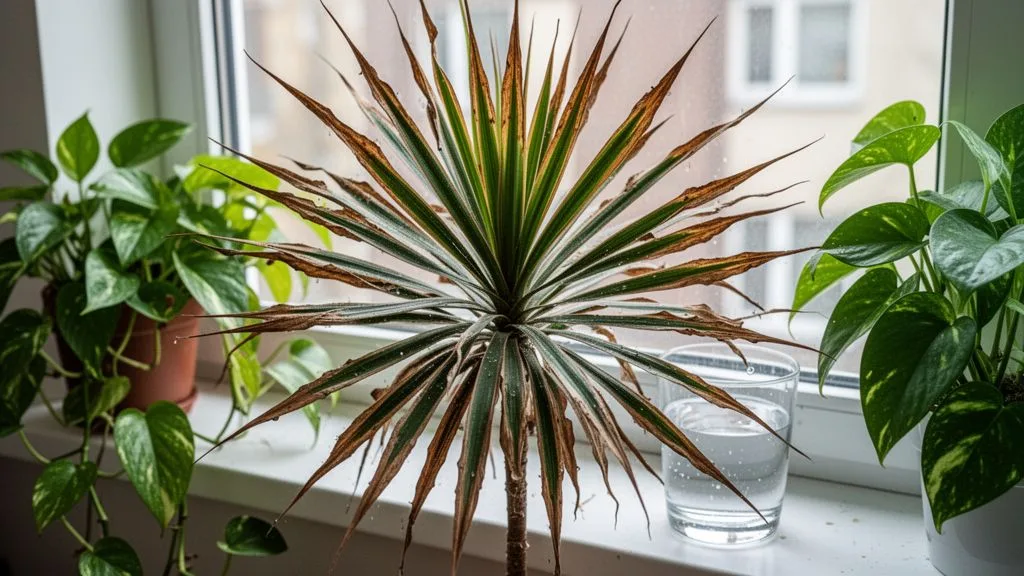
The practical fix is usually simple: switch the dracaena to distilled, rain, or reverse osmosis water for a few weeks and watch the next leaves. That costs more and adds a chore. Still, for this plant, it usually works better than chasing humidity gadgets or changing the pot.
Why dracaena reacts faster to ordinary municipal water
Dracaena has a reputation among growers for being touchy about water chemistry. Fluoride gets most of the attention, but it is not the only issue. Calcium, magnesium, sodium, and fertilizer salts all accumulate in container soil, and dracaena tends to show that stress earlier than pothos or philodendron.
Leaf tips are where the problem becomes visible because dissolved solids move with water through the plant and end up concentrated at the farthest points. The tip is a dead end. Once enough residue collects there, cells dry out and die. You see crisp browning long before the whole leaf declines.
This is why the pattern often looks oddly neat. Green middle, brown point. It looks cosmetic because it is, at first. But it still points to a real mismatch between the plant and the water source.
What tap water leaves behind in the potting mix
Tap water is not one thing. In Phoenix, Las Vegas, and parts of inland Southern California, the total dissolved solids can be high enough that sensitive foliage plants show stress quickly. In other places, the bigger issue may be fluoridation or chloramine treatment rather than hardness alone.
Three common contributors show up again and again:
- Fluoride - especially troublesome for dracaena, even at levels people drink without noticing.
- Hardness minerals - mainly calcium and magnesium, which leave residue in soil and on pots.
- Sodium and fertilizer salts - often worse if the home uses a sodium-based water softener.
A non-obvious detail: softened water can be worse than hard water for potted plants. It feels gentler in the shower, but sodium builds up in containers. For dracaena, that trade-off is usually a bad one.
Leaving water out overnight helps only a little. It can reduce plain chlorine. It does not remove fluoride, hardness minerals, or most chloramine.
Why pothos and philodendron usually tolerate the same faucet longer
Pothos and philodendron are simply more forgiving. They handle a wider range of indoor mistakes, including average city water, light salt buildup, and inconsistent watering. They are not immune, but they usually need more stress before leaf margins start browning.
Growth habit matters too. Pothos often grows fast enough to replace imperfect leaves and keep looking healthy. Heartleaf philodendron does much the same. Dracaena grows more slowly, so every damaged tip stays visible longer and makes the plant look worse, even when the overall stress is mild.
Here is the contrarian part: the prettier plant is not always the healthier one. A pothos can mask mediocre water because its bigger indoor problems are often low light or overwatering. Dracaena, by contrast, may be otherwise well cared for and still show crisp tips from water chemistry alone.
How the browning pattern differs from dryness or fertilizer burn
Brown tips do not automatically mean tap water. Dry indoor air, missed waterings, compacted mix, and heavy feeding can create similar damage. The clue is the pattern across the whole plant and over time.
If tap water or salt buildup is the main problem, you usually see gradual browning on tips and margins while the rest of the leaf remains mostly green. White crust on the pot rim or soil surface strengthens the case. If low humidity is doing the damage, the edges often look finer and crispier, especially during winter heating season when indoor air can dip below 35% relative humidity.
Fertilizer burn tends to appear faster after feeding. Underwatering usually causes drooping first, then broader dry patches. Overwatering brings yellowing, soft stems, or stalled growth before classic tip burn shows up.
If only the dracaena is affected, pay attention to that clue. Species differences matter.
What actually works if the tips are already brown
Start with the water. Use distilled water, rainwater, or reverse osmosis water for 4 to 8 weeks. Distilled water often costs about $1 to $2 per gallon at a grocery store, which is annoying for large collections, but it is the cleanest short-term test.
Then flush the pot thoroughly. Run low-mineral water through until at least twice the pot's volume drains out. If the plant sits in old, dense mix, repotting may work better than repeated flushing because stale media holds onto salts.
Trim the dead tips only for appearance. They will not turn green again. Cut along the natural leaf shape and leave a very thin brown edge behind so you do not open fresh healthy tissue.
Also back off fertilizer for a while. For indoor dracaena, half-strength feeding once a month during active growth is usually enough.
Water options that help, and the ones that disappoint
For dracaena, the best options are straightforward: rainwater, distilled water, or reverse osmosis water. Reverse osmosis is especially useful if you already have a countertop unit or under-sink system. Basic carbon pitcher filters like Brita improve taste, but they often do not remove enough fluoride or dissolved minerals to stop tip burn.
A half-and-half mix of tap and distilled water can be a decent compromise if buying all distilled feels excessive. It is not perfect. It often lowers the mineral load enough to reduce new damage, though.
Do not bother relying on standing water overnight as your main strategy. For dracaena, that fix is too weak. If clean tips matter, use low-mineral water consistently.
Frequently asked questions
Will the brown tips heal after switching water?
No. Damaged tissue stays damaged. What changes is the next round of growth. If new leaves emerge clean after several weeks, the plant is recovering even if the old leaves still show scars.
Is reverse osmosis water better than filtered pitcher water?
Usually yes. Reverse osmosis removes far more dissolved solids than a standard pitcher filter, which is why it works better for fluoride-sensitive plants like dracaena and spider plant.
Can dracaena survive on tap water anyway?
Yes, sometimes. But survival and clean foliage are not the same goal. In hard-water areas, dracaena often survives while still producing ugly, recurring tip burn.
Why this shows up faster in containers than in the ground
A potted plant lives in a small closed system. Every watering leaves something behind, and there is only so much soil available to dilute the residue. In a landscape bed, rainfall and larger soil volume wash minerals farther away from the roots.
Container habits can make the problem worse. Light, frequent sips leave salts behind near the root zone. A full watering with drainage is better. So is emptying the saucer afterward.
If you want one clear recommendation, here it is: keep using tap water for pothos and philodendron if they look fine, but give dracaena distilled, rain, or reverse osmosis water instead. This is one of those cases where the fussy plant is telling the truth first.