
You repot a plant, water it in, and a few days later the leaves start turning yellow. The fast change makes fertilizer look like the obvious fix. Usually, it is not.
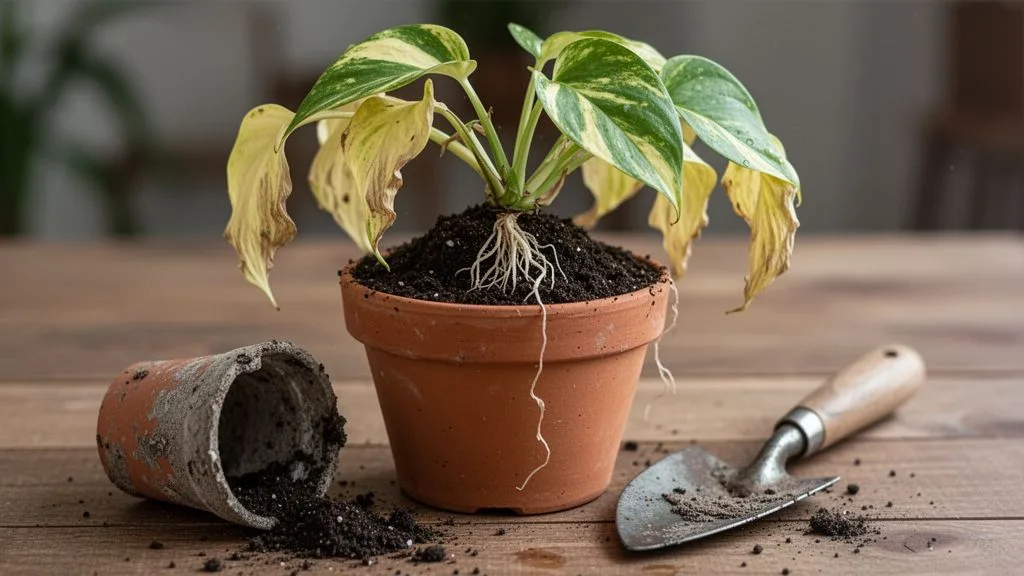
If yellowing starts within 24 to 72 hours of repotting, root disruption is the first thing to suspect. A true nitrogen deficiency usually develops slowly, often over weeks, and it tends to show up first on older leaves while the plant keeps limping along in a generally pale state. A plant that was green on Friday and yellow by Monday is usually reacting to damaged roots, broken root hairs, poor oxygen in the new mix, or a bad moisture shift around the root ball.
This distinction matters because the wrong response can deepen the problem. Feeding a stressed Monstera deliciosa, pothos, or peace lily right away can add fertilizer salts to roots that are already struggling to absorb water.
Why the timeline matters more than the color
Yellow leaves do not all mean the same thing. Timing tells the story better than color alone.
Nitrogen is a mobile nutrient. When a plant is short on it, the plant pulls nitrogen from older leaves and sends it to newer growth. That is why genuine nitrogen deficiency usually begins as a gradual fading of older foliage. Growth slows. The whole plant starts looking washed out over time.
Repotting shock behaves differently. It often appears fast. A plant can wilt, yellow, curl, or shed a leaf within a few days because the fine feeder roots that handle most water uptake were disturbed. Even careful repotting can damage them. Those tiny roots are delicate.
Fresh potting mix already contains nutrients in many cases. A bagged mix like FoxFarm Ocean Forest or Miracle-Gro Indoor Potting Mix is not empty soil. So if a plant yellows right after being moved into it, the issue is usually not that the mix suddenly lacks nitrogen. The plant often cannot use what is already there.
What actually happens underground after a rough repot
Roots do more than anchor the plant. They absorb water, oxygen, and dissolved nutrients. The finest root hairs handle much of that work, and they tear easily during transplanting, especially if the root ball was packed, dry, or circling hard around the pot.
Once enough of those structures are damaged, water movement slows. Leaves lose turgor. Stomata close to reduce water loss. Photosynthesis drops. Chlorophyll begins to break down, and yellowing follows. It looks like hunger, but the trigger is stress.
Overpotting can make this worse. Move a 6-inch plant into a 10-inch pot, and the extra soil may stay wet too long. Wet soil is not automatically healthy soil. If oxygen levels around the roots drop, recovery slows and rot can start. Then the plant yellows even more.
This is the non-obvious part: a plant can yellow in nutrient-rich soil because the roots are physically unable to access those nutrients. The problem is uptake, not supply.
Patterns that separate transplant shock from nutrient shortage
Look for clusters of symptoms, not one yellow leaf.
- Likely transplant shock: yellowing starts soon after repotting and is paired with drooping, curling, limp texture, or leaf drop.
- Likely nitrogen deficiency: older leaves fade first, the change is even rather than blotchy, and the plant has probably been underfed for a while.
- Likely root rot after repotting: soil stays wet for 7 days or longer, the pot smells sour, and stems or leaf bases start softening.
- Normal adjustment: one or two bottom leaves yellow while the rest of the plant stays firm and stable.
Another clue is water use. A healthy, recently repotted plant should start drying the mix at a reasonable pace after the initial settling-in period. If the soil stays heavy and cold for too long, root function is probably poor.
Repotting mistakes that trigger yellow leaves fast
Small errors can create the same symptom through different routes. The leaf color looks similar. The causes are not.
A common mistake is breaking apart the root ball too aggressively. Light teasing of circling roots is often enough. Pulling a dense mass completely apart can remove a big share of feeder roots in one session. Plants like calathea and fittonia tend to complain fast when that happens.
Soil mismatch is another frequent problem. A peace lily placed into a very chunky orchid-style bark blend may dry too fast. A snake plant placed into moisture-control mix with little air space may stay wet too long. Both can yellow, but for opposite moisture reasons.
Pot size matters too. Going up 1 to 2 inches wider is usually safer than jumping several sizes. The trade-off is that a smaller step-up means you may need to repot sooner again, but it reduces the risk of a wet, stagnant root zone.
Then there is poor root ball wetting. If the old root mass had gone hydrophobic before repotting, water may run through the fresh mix around it while the center stays dry. The surface looks watered. The roots disagree.
Why fertilizer often backfires in the first two weeks
Fertilizer does not repair broken roots. It only helps when the roots can take it up.
Right after repotting, especially after root pruning or heavy teasing, the root system may be partly offline. Adding a strong liquid feed such as Dyna-Gro Foliage-Pro or a full-strength 20-20-20 solution can raise salt levels around vulnerable tissues. That can increase stress and sometimes burn root tips.
For most houseplants in fresh potting soil, waiting about 2 to 4 weeks before fertilizing is the safer move. There are exceptions. Plants moved into inert media such as LECA, straight coco coir, or a semi-hydro setup may need a dilute nutrient solution sooner because the medium itself provides little or nothing. Regular potting mix is different.
So the recommendation is clear: do not treat sudden post-repot yellowing as a cue for immediate nitrogen feeding unless the plant was transferred into an inert medium and you know its nutrient plan is missing.
How to help the plant recover without making the roots work harder
Good aftercare is plain. That is why people skip it.
Give the plant bright, indirect light instead of harsh afternoon sun. Keep temperatures steady, ideally around 65 to 75 degrees Fahrenheit. Avoid cold drafts, heater blasts, and constant relocation between rooms. Stability helps more than products do.
Water thoroughly, then let the mix move toward lightly moist rather than soaked. Check the actual root ball, not just the new soil around it. If the center stayed dry during the first watering, soak more carefully until the old root mass and the surrounding mix are evenly moist.
- Use a pot with open drainage holes.
- Do not prune heavily at the same time.
- Skip fertilizer until the plant firms up.
- Remove fully yellow leaves after they are mostly spent.
- Watch moisture use for 7 to 14 days.
If you are unsure, do less. Constant tinkering causes extra damage.
Cases where nitrogen really can be part of the problem
It happens, but not first in most fresh post-repot yellowing.
A plant that was already underfed for months may show clearer deficiency symptoms after the move because the stress exposes a weakness that was already there. Fast growers such as basil, coleus, or a hungry pothos can also run short if they are placed into a low-nutrient medium and given only plain water for too long.
Another exception is bare-root transfer into nearly inert material. If a plant is washed free of old soil and moved into LECA or straight coco, the root zone has to rebuild while also relying on you for all nutrition. In that setup, delayed feeding can become its own problem.
Still, the sequence matters. If yellowing started right after the transplant, root stress remains the more likely first cause. Feed later if the plant stabilizes but stays pale.
Frequently asked questions
How long should yellowing last after repotting?
Mild transplant stress may settle within 1 to 2 weeks. Older yellow leaves often do not turn green again, but the spread should slow. If new leaves keep yellowing beyond that period, inspect watering, soil texture, and root health.
Should you repot again if the new soil seems wrong?
Usually no, unless the problem is serious. Dense mud-like soil, no drainage, or active rot are valid reasons to act. A mildly shocked plant often does better with stable conditions than with a second disturbance a few days later.
Can one yellow leaf after repotting be normal?
Yes. Losing one older bottom leaf can be part of normal adjustment, especially on a ficus or philodendron. Rapid yellowing across several leaves is a different pattern and deserves closer attention.
What recovering roots look like over the next week
The best sign is not greener old leaves. It is steadier function.
A recovering plant starts holding itself up better. The pot begins drying at a normal pace again. New growth may resume, even if the oldest damaged leaves still drop. White or tan roots are encouraging if you have a reason to inspect them. Black, mushy roots with a sour smell point to ongoing failure.
If yellowing begins right after repotting, treat it as a root problem first. Give the plant oxygen, moderate moisture, and time. Nitrogen can wait. A bottle of fertilizer will not fix torn root hairs, but a calmer root zone often fixes the leaves that follow.